
Fortinet has recognized ABRIS Distribution’s expertise in operational technology. The specialization supports the development of partner projects focused on industrial cybersecurity.
At a business breakfast in Almaty, experts from Fortinet and ABRIS discussed industrial infrastructure security, incident readiness and opportunities for partners to grow their OT business.
On November 20, ABRIS Distribution and Fortinet hosted a business breakfast in Almaty focused on operational technology (OT) cybersecurity. Participants discussed how to protect industrial systems while maintaining continuous operations, and why incident preparedness is an essential part of these projects.
The session examined cyberattacks targeting energy and industrial infrastructure, including power grids, generation facilities, district heating systems, wind farms and solar installations. These incidents affect both operational technology and connected business systems.
Industrial environments require a tailored approach. Security measures must account for operational continuity, equipment characteristics and the protocols in use. The presentation therefore focused on network segmentation, access control, industrial traffic analysis and incident response readiness.
Participants explored several interconnected areas of OT security:
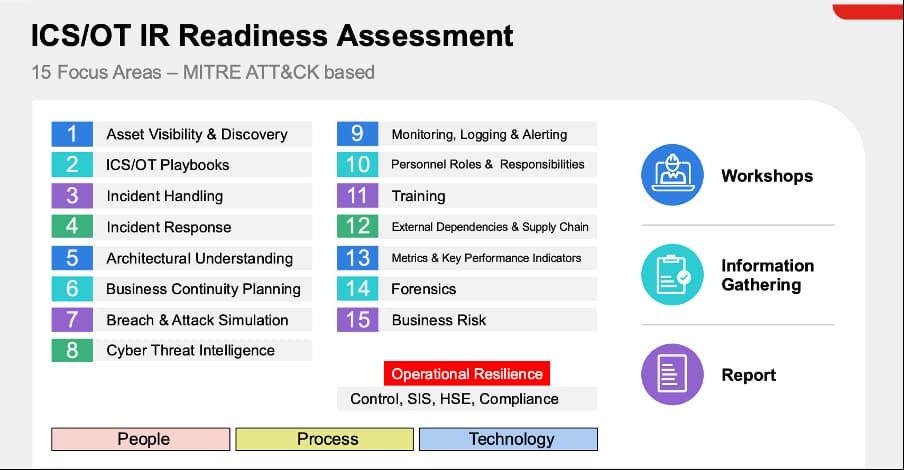
The session also highlighted the ICS/OT IR Readiness Assessment, an approach to evaluating incident response preparedness. It covers 15 areas, from asset inventories and response playbooks to attack simulations and business risk assessment. This helps organizations identify which aspects of their security and response capabilities need attention first.
The Fortinet Business Development Manager at ABRIS Distribution spoke about the company’s achievement of the Fortinet OT Distributor Specialization. The qualification process included team training, technical examinations and validation of commercial expertise. For partners developing their industrial cybersecurity business, this provides a basis for involving ABRIS in discussions about customers’ OT requirements and the application of Fortinet solutions. ABRIS sees the specialization as the next step in strengthening its collaboration with Fortinet and the partner channel in Kazakhstan.
“Partners entering the OT market need a team with validated expertise they can rely on. Our specialization reflects specialist training, technical examinations and demonstrated knowledge of Fortinet’s commercial offering. We will continue to build this expertise to help partners discuss industrial cybersecurity needs with their customers.”
The event continued over breakfast and informal networking. The approaches discussed provide a foundation for future projects: understanding the infrastructure, identifying critical interactions and assessing the team’s readiness to respond to incidents.
Fortinet has recognized ABRIS Distribution’s expertise in operational technology. The specialization supports the development of partner projects focused on industrial cybersecurity.

ABRIS Distribution becomes the first SecOps-specialized distributor in Central Asia.

New eBook Available: Transform Your Security Operations at AI Speed.

On September 28, an event was held in Almaty dedicated to the replenishment of our portfolio (ABRIS Distribution) with a new vendor - Fortinet.

We are pleased to announce the addition of one of the strongest players specializing in software and hardware network security systems and UTM solutions to our portfolio - Fortinet.

Partner engineers in Kazakhstan met with ABRIS and Cisco teams for technology sessions and informal networking at ABRIS & Cisco TechClub.